

The Pleistocene Was A World Straight Out of Myth and Fantasy
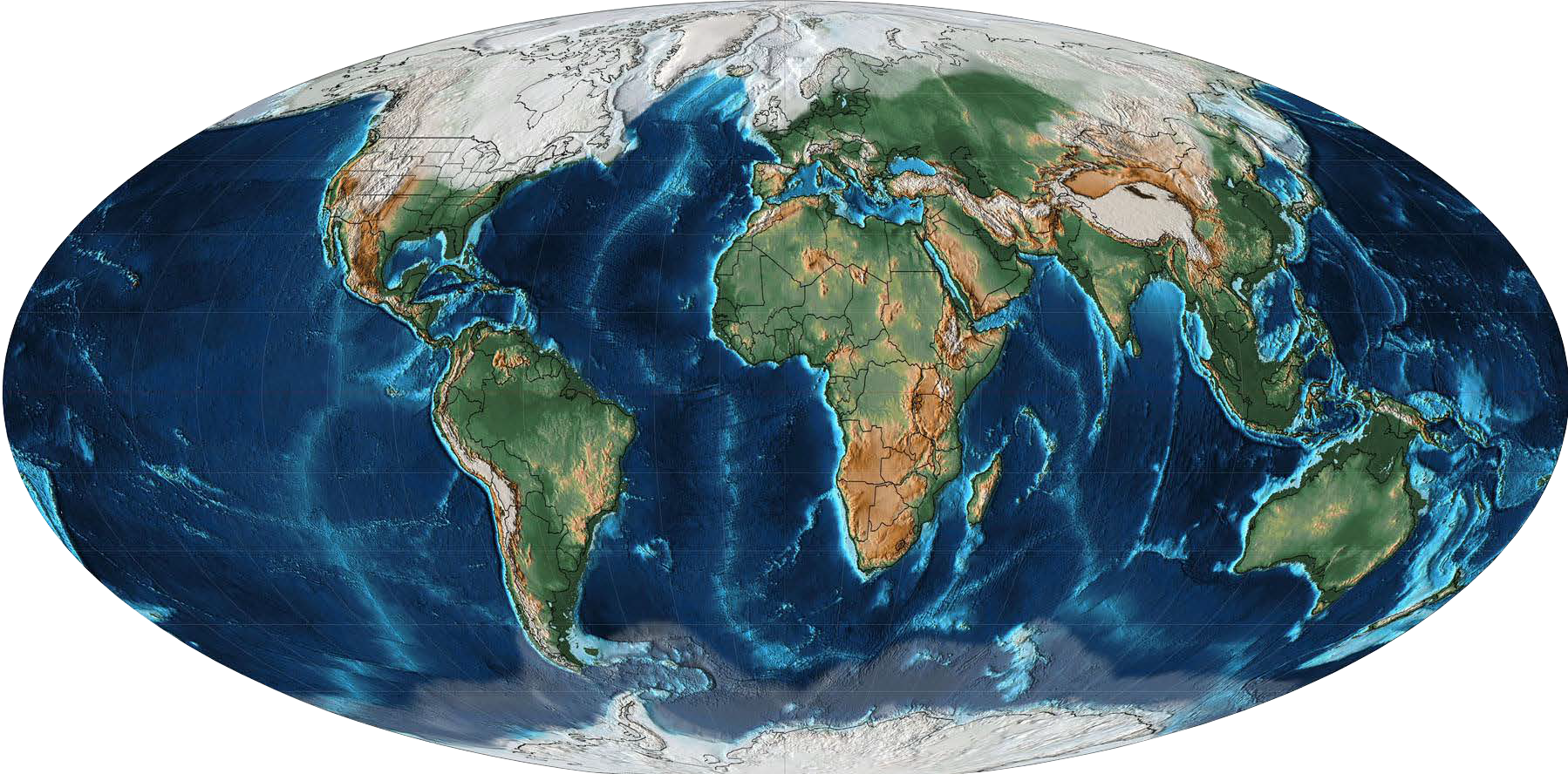
I want to paint a vivid picture in your mind of what the ancient world was truly like. Let’s piece together and imagine the Earth during the Pleistocene epoch, before the Younger Dryas—a sudden mini-ice age event—around 12,000 years ago. As I’ve delved into this research, one thing becomes clear: our planet was like something out of The Lord of the Rings—a realm filled with fantastical, almost magical creatures that no longer exist. Compared to that incredible, mystical place, the world we live in today feels toned down and benign.
Human beings themselves are a perfect example. Based on bones recovered from early humans, our ancestors had insanely strong muscles and incredibly dense bones. Even the women, on average, had bone density greater than that of modern professional male athletes. These people were absolute units—completely naturally.
But there’s so much more to it. Let’s start by visualizing the Earth itself and its natural environment.
Sea levels were dramatically lower—scientists’ best estimates place them 120 to 140 meters below today’s levels. That’s a huge difference! Every landmass was significantly larger. Pretty much anywhere you see light blue on a map (indicating shallow ocean) was dry land back then. The English Channel was above sea level, the Mediterranean Sea was much smaller, Florida connected to the Bahamas and Cuba, and South America extended farther into the Atlantic (as depicted on the famous Piri Reis map). The islands of Southeast Asia and Australia were largely connected, while China linked to Taiwan and the Philippines. Coastlines everywhere looked entirely different, and much of the world’s water was locked up in massive inland seas or huge lakes.
Overall, the planet was far wetter. There were fewer deserts—the Sahara barely existed, Egypt was lush and green, the Middle East was much greener, and North America was covered in temperate forest with little to no desert in the southwest. This created a moderate, pleasant climate across far more of the globe than we enjoy today.
Not only were the oceans and climate transformed, but the plants and animals were as well. Entire forests reached old-growth maturity, allowing trees to grow to gigantic proportions. Virtually every forest would have featured enormous 200-, 300-, or even 400-foot giants resembling California’s redwoods. This dramatically altered ecosystems in temperate and tropical regions.
These massive trees supported species that would seem alien to us now: Gigantopithecus (essentially a real-life Bigfoot), 12-foot-tall giant sloths with enormous claws roaming the landscape. And then consider the mushrooms these ancient forests nurtured. Even today, scientists study rare mushrooms in remaining old-growth forests for their medicinal properties—species that only grow under such specific, long-term conditions. Researchers believe some could hold keys to curing cancer or even reversing aging.
Imagine the extraordinary properties of mushrooms from those planet-spanning old-growth forests—properties now largely lost to us. A “magic mushroom” from that era might have been truly mind-altering.
Now let’s talk about some of the remarkable creatures that no longer walk the Earth.
First, there were hobbits. Skeletons of 3- to 4-foot-tall humans discovered in Indonesia are widely accepted as a distinct species capable of higher thought like Homo sapiens—not merely some ape. These “Homo floresiensis” lived during the Pleistocene.
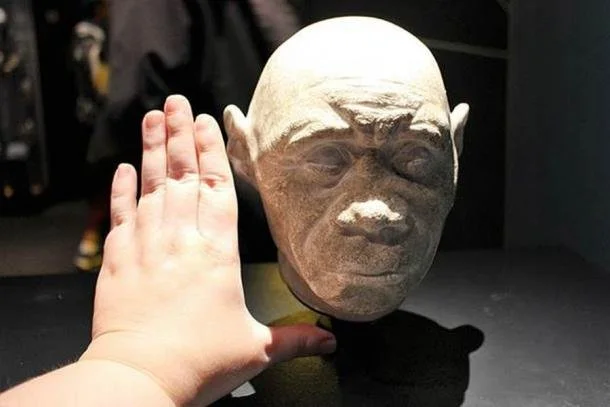
Then there were the giants. While stories of ancient giants abound in lore, we can confirm with 100% certainty the existence of Denisovans—an entirely separate human species, more closely related to Neanderthals. We’ve recovered gigantic skulls, teeth, and jawbones. Best estimates place them at 7 to 10 feet tall on average. They lived during the Pleistocene, with the earliest specimens dated to around 30,000 years ago, though they likely survived until the Younger Dryas.
So we have giants and hobbits—what about wizards? Much of what was possible in that era would have seemed outright magical and was almost certainly recorded as such in early myths.
Consider the potency of herbs from untouched old-growth forests and pristine soil. Our ancestors may have cured any ailment with the plants around them—pure magic to observers. Massive Denisovans could have constructed enormous megalithic walls and stone forts that would baffle average Homo sapiens, who might only explain them through sorcery.
Many giant animals were surely viewed as magical forest spirits. The aurochs—massive wild cattle of Europe and the steppes—appear in myths as bestowing divine strength when consumed. The Irish elk features in Irish lore as a sacred keeper of the land. Woolly mammoths and giant bison of North America were revered by Clovis hunters as life-giving spirits.
Virtually every animal had a giant Pleistocene version. Look up almost any modern species alongside “Pleistocene” or “megafauna,” and you’ll likely find an enormous ancestor. Some were terrifying: New Zealand’s giant moa birds and Haast’s eagle (the largest birds ever), or oversized crocodiles, monitor lizards, pythons, cobras, and turtles that could easily inspire dragon legends.
Even “normal” animals were deadly in giant form—beavers, armadillos, capybaras, wombats, even rabbits capable of severe injury. Then there were the true monsters: cave bears, short-faced bears, saber-toothed tigers, woolly rhinoceroses, dire wolves, giant jaguars, cave hyenas, and oversized orcas.
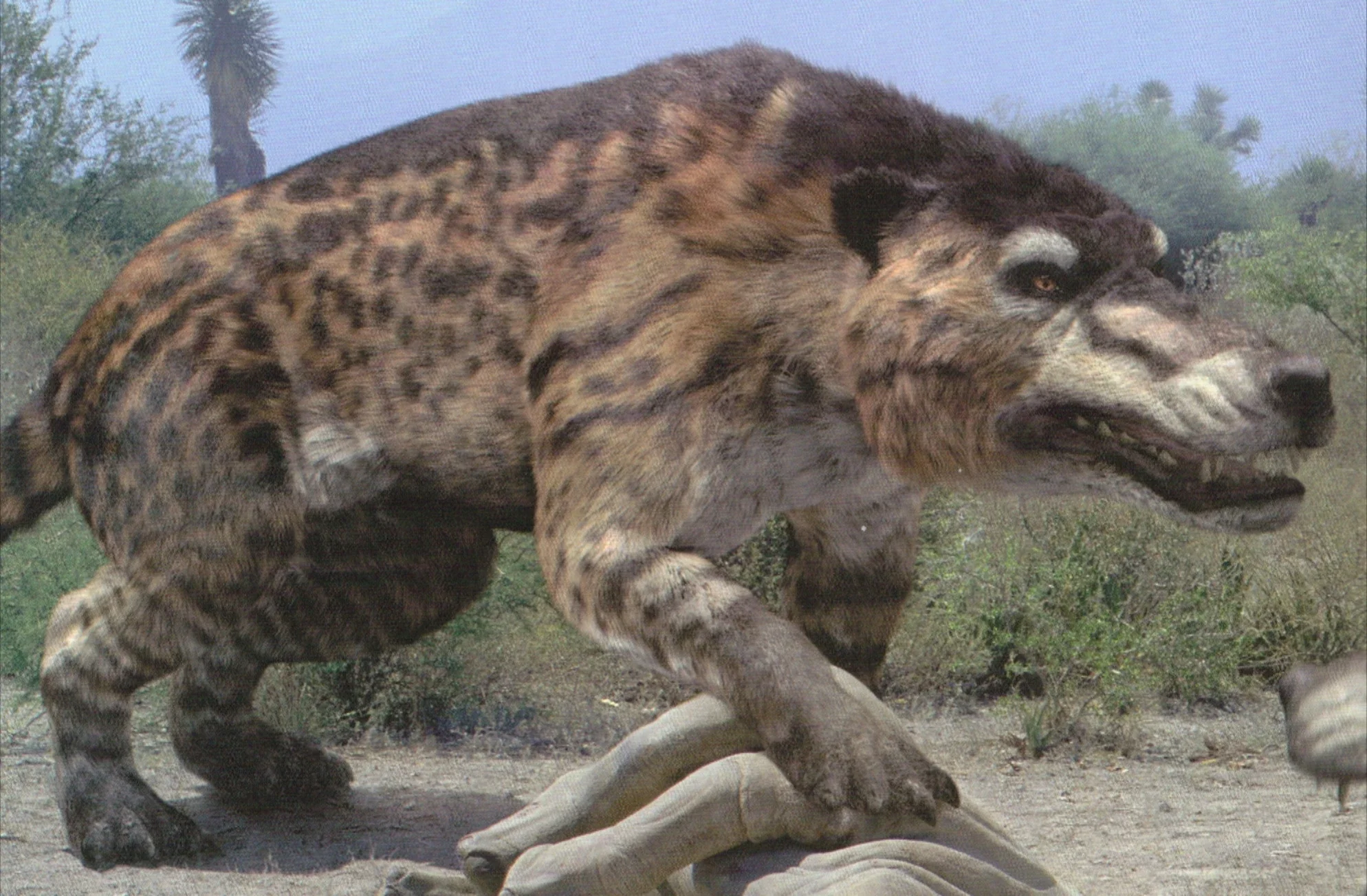
Many extinct megafauna look like they stepped out of Lovecraftian horror: Macrauchenia, Toxodon, Doedicurus, Elasmotherium, Procoptodon, Sivatherium, Palaeoloxodon, Xenorhinotherium, Andrewsarchus, Astrapotherium, Platybelodon, Titanohyrax. It’s easy to see how these inspired mythological beasts.
All this ended abruptly during and after the Younger Dryas. Most megafauna species were wiped out, leaving us with smaller remnants.
This perspective helps explain ancient myths and legends, many of which may stem from oral traditions dating back to this era. They often describe a golden age when gods ruled, humans interacted regularly with the divine, and terrible creatures lurked beyond civilization—dragons, chimeras, sea serpents—possibly memories of megafauna or surviving individuals.
We know woolly mammoths persisted far longer than once thought. Remains on Wrangel Island in northern Siberia date to around 2000 BC, and recent soil-sample studies published in Nature indicate North American mammoths survived until roughly 3000 BC—overlapping with early civilizations.
For context, Sumerian civilization began around 4500–4000 BC. Meanwhile, post-Younger Dryas populations like the Clovis culture were recovering, building early settlements at sites such as Caral in Peru, mound complexes along the Mississippi and its tributaries, Poverty Point in Louisiana, possibly Tiwanaku in Bolivia, Cahokia in Illinois, pre-Olmec sites in Veracruz, and early Maya centers—all while mammoths and potentially other megafauna still roamed northern regions.
Fossilization is rare; most remains simply decay. What science has uncovered is likely just the tip of the iceberg.
The next time you read ancient texts—the Epic of Gilgamesh, Plato’s Atlantis, the Age of Cronus, China’s mythological dynasties, or Native American and Siberian shamanic traditions—remember the Earth looked radically different. Sea levels were far lower (submerging countless coastal cities), bizarre creatures truly existed, and multiple human species coexisted.
This is why I take ancient myths seriously. When you align them with scientific evidence, it’s clear the storytellers were describing real things they—or their ancestors—had witnessed. The more we explore, especially underwater archaeology and advanced scanning of ancient sites, the more these legends will be validated.

.png)
