

What Did Ancient People Think About Dinosaurs and Fossils?
This topic has fascinated me for years: What did ancient humans make of dinosaur fossils and other extinct monstrous creatures they unearthed? I'm Andrew from Tales of the Olde World—let's dive in.
Many cultures undoubtedly encountered fossils, imprints, and bones embedded in the earth. Their writings, oral traditions, and beliefs offer intriguing clues about how they interpreted these finds.
My curiosity sparked during a trip to the Grand Canyon. Driving north from the southern entrance, about 30 minutes to an hour out, I spotted a billboard: "Dinosaur bones here." I pulled over on what I believe was Navajo land (possibly Hopi, but likely Navajo). A group of young Native guys greeted me and gave a casual tour. They revealed fully intact dinosaurs visible right in the ground—like museum exhibits. The standout was a perfectly preserved velociraptor, articulated and complete, as if the animal had collapsed and been buried instantly in mud. It was astonishing.
They explained that Navajo traditions prohibit disturbing the earth through excavation—even homes lack deep foundations. This cultural respect kept these fossils protected and intact. But it raised a bigger question: Without modern paleontology, what did ancient Navajo and other tribes believe these were?
The answers proved mind-blowing.
Navajo Beliefs: Monsters Turned to Stone
Navajo stories trace dinosaur fossils to the Hero Twins (Naayééʼ Neizghání and Tóbájíshchíní), born of Changing Woman and the Sun God. This motif echoes Mesoamerican tales, like the Mayan Hero Twins in the Popol Vuh, who defeated underworld gods to usher in humanity.
The most accepted version appears in Diné Bahaneʼ: The Navajo Creation Story (recommended reading—check talesoftheoldeworld.com for our book list). The twins rid the world of monsters born in the Third World (a prior era of separation between men and women). In loneliness, women sought gratification from unnatural objects—rocks, antlers, eagle feathers, cacti—birthing abominations.
The Hero Twins slew these using divine weapons, including lightning arrows (paralleling Zeus vs. Typhon, Marduk vs. Tiamat, or Indra vs. Vṛtra). The monsters turned to stone, scattered across the landscape as reminders of the twins' heroism and warnings: Neglect traditions and rituals, and evil could return.
Many Navajo historically viewed exposed dinosaur fossils—common in the region, including near the Grand Canyon—as these petrified monsters. Some exist within mountains and sacred sites. Disturbing them breaks the twins' seal, unleashing chaos. This explains reluctance to excavate.
Navajo weren't alone. Other cultures interpreted fossils through their myths—often blending Pleistocene megafauna (mammoths, mastodons) with rarer dinosaur remains.
Fully intact skeletons are rare even today (only ~50–100 known). Navajo exposure to complete specimens makes their tradition unique. Elsewhere, people dealt with partial bones, single elements, or mixed bone beds from floods or erosion.
China: Dragon Bones in Medicine and Myth
Ancient Chinese scholars and healers called fossils "dragon bones" (long gu), remnants of mythological dragons. Found in places like Shanxi and the Gobi, they were ground into powder for traditional medicine—to impart dragon strength, qi, or ward off demons. Mostly Pleistocene mammals (mastodons, giant rhinos, four-horned giraffes, ancient horses), but also hadrosaurs, theropods, and sauropods.
Chinese dragons—long, wingless, serpentine—may draw from these fossils. Dragons combined features: camel head, demon eyes, cow ears, deer antlers, snake neck/body with carp scales, clam belly, eagle claws, tiger paws. Divine beings from heavens, they aided emperors (e.g., Yellow Dragon helping Yu tame floods) or were cast down, their bones forming stone, blood rivers, or sacred mountains.
India: Mahabharata Battlefields
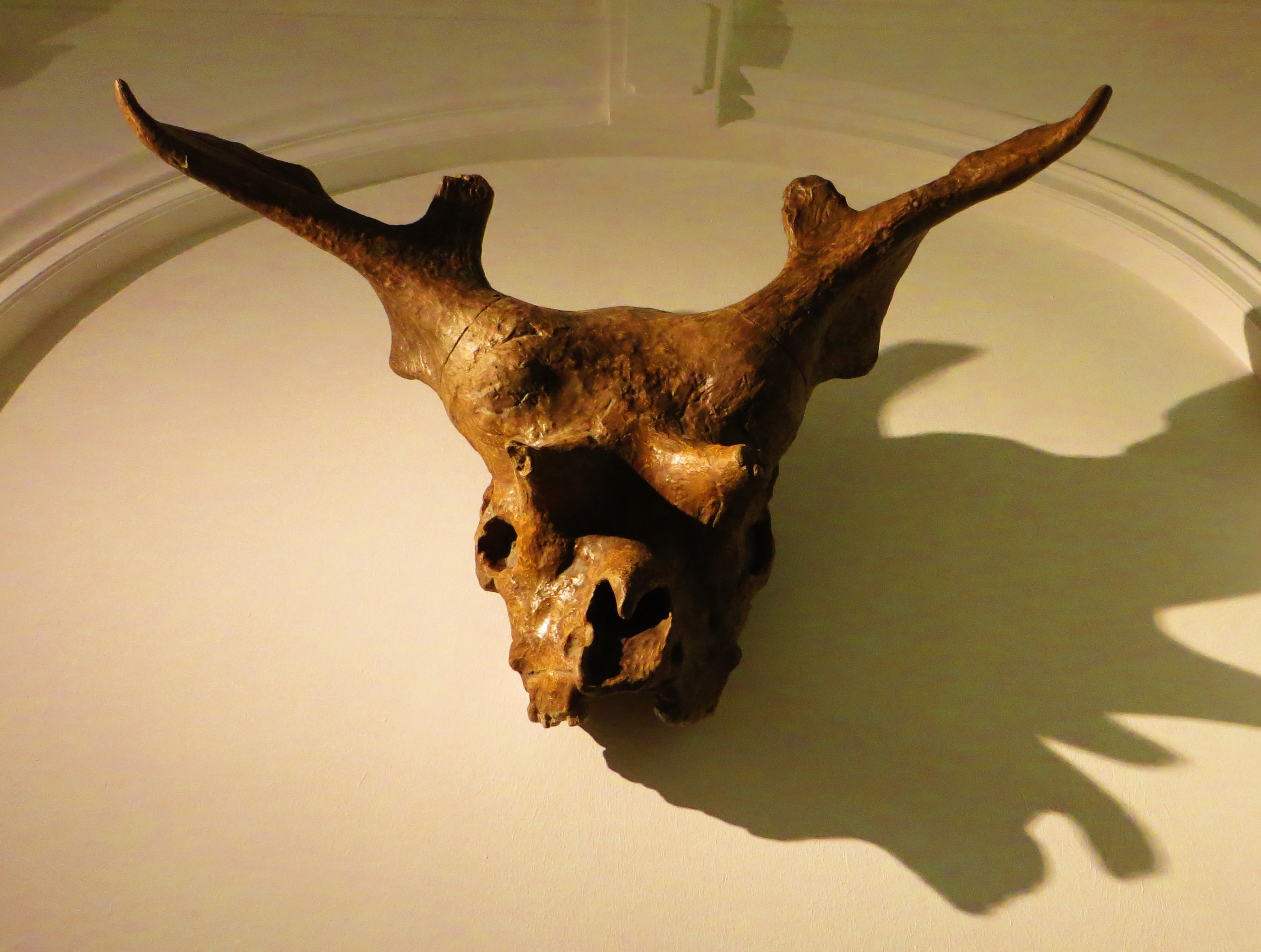
In the Siwalik Hills, bone beds mix Pleistocene giants (elephants, four-horned giraffes, orangutans, crocodilians, rhinos) with early human tools. Hindu traditions linked them to the Mahabharata's epic war—millions of warriors, gods, demons, giants, naga serpents, chariots—creating vast killing fields.
Greece and Rome: Remains of Heroes and Titans
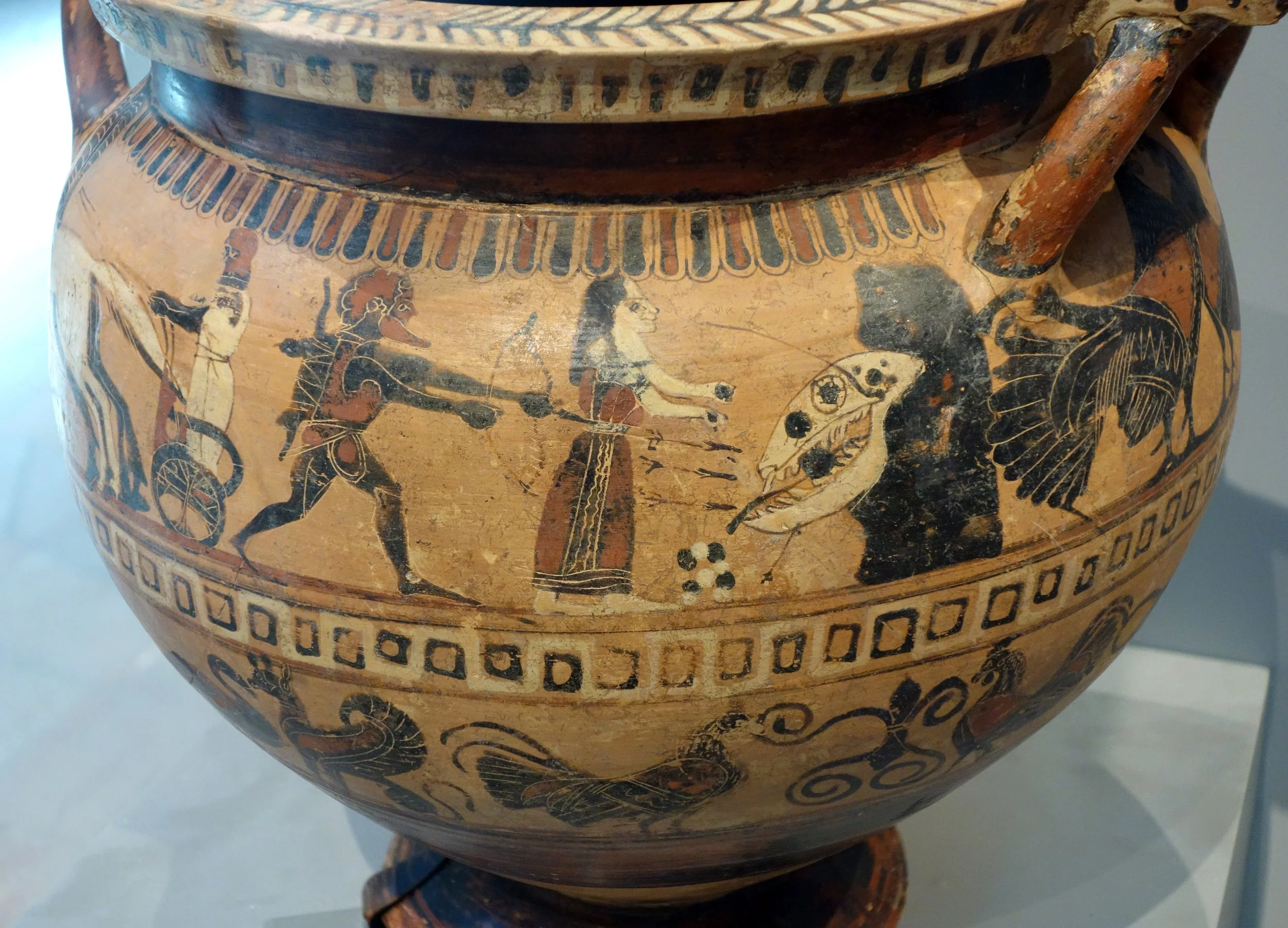
Greeks and Romans found mostly Pleistocene fossils (mastodons, woolly rhinos), some dinosaurs. They attributed them to mythological giants, titans slain by Zeus/Olympians, or heroes/demigods.
Examples:
Orestes' skeleton (son of Agamemnon) discovered in Tegea (Arcadia, mid-6th century BC); transferred to Sparta per Delphic oracle, symbolizing dominance.
Theseus' colossal bones retrieved from Skyros (~475 BC) by Cimon, enshrined in Athens' Theseion.
Ajax's tomb on Trojan coast exposed under Hadrian; bones venerated.
Pelops' giant shoulder blade (likely mammoth/whale scapula) enshrined in Olympia's Pelopion, tied to Olympic Games.
Other Cultures Worldwide
Southern Africa (Uganda, Tanzania): Fossils as prehistoric monsters/giants or cataclysm proof; trackways linked to mythical beasts.
Mesoamerica: Myths of giants (quiname) or failed creation cycles (Popol Vuh) possibly tied to mammoth/large vertebrate fossils.
Australia: Aboriginal stories link megafauna bones to ancestral beings; Kimberley trackways to Rainbow Serpents.
New Zealand (Maori): Large bones as taniwha (sea serpent-like monsters).
Tibet: Fossils as mythic animals/divine beings; used in ritual medicine/talismans.
Hindu traditions: Extinct bones as nagas (serpent people) or asuras (opposing titans).
Celtic: "Serpent stones" or snake stones as dragon remains. (Note: "Dragon" appears similarly worldwide—worth researching.)
Norse/Germanic: Fossils as jötnar (giants, fathers of frost giants and Loki).
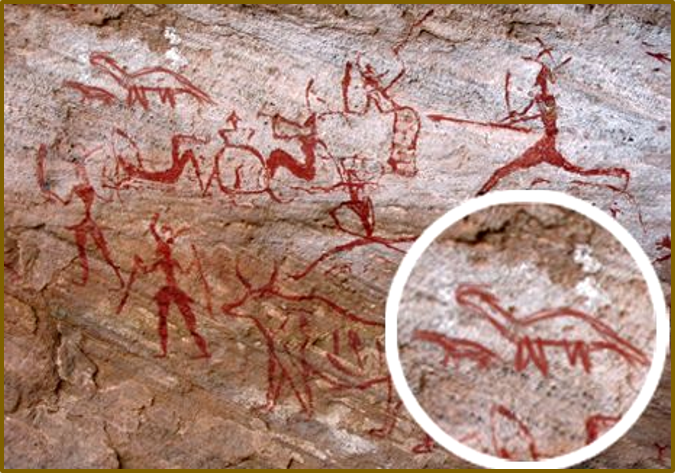
North American Plains tribes: Megafauna/dinosaur bones from thunder beings/thunderbirds—divine storm/weather spirits, protectors/balancers, rivals to horned serpents/underwater panthers (some rock art resembles dinosaurs).
Early Mesopotamia: Fossils as ancient giants/hybrids (apkallu—part-man, part-fish); proof of pre-flood primordial age (Epic of Gilgamesh).
Early Israelites: Bones from Nephilim—giant offspring of fallen angels/daughters of men—wiped out by Noah's flood for corruption.
Across cultures, patterns emerge: Fossils explained as remnants of giants, dragons, monsters, or divine/primordial beings from lost ages. Disturbing them risked unleashing chaos. These interpretations blended real discoveries with cultural frameworks—often megafauna, sometimes dinosaurs—long before modern science.
Ancient people weren't ignorant; they observed, explained, and integrated these wonders into their worldviews. What stories might we tell if we stumbled on such relics without paleontology?


